4 min readShopify launches
The 13 Storefront MCP Tools Your Shopify Store Already Exposes

By Kratik Agrawal
Published Jun 30, 2026 Updated Aug 5, 2026
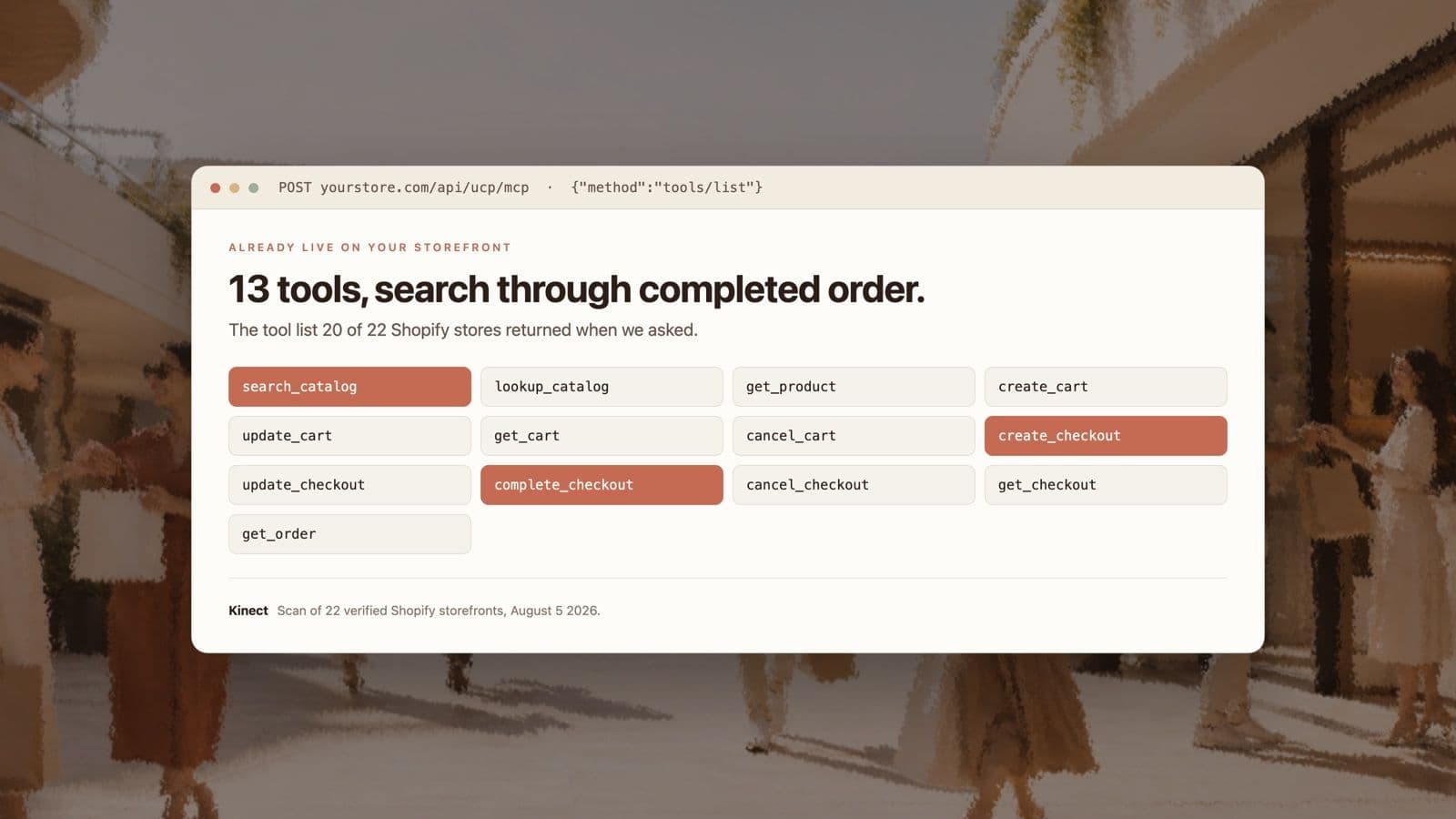
The Model Context Protocol is the plug standard AI agents use to talk to external systems. Shopify wired one into storefronts, so an assistant answering a question about your store no longer has to scrape your theme. It asks the store.
We wanted to know how far that had actually rolled out, so on August 5, 2026 we sent a tools/list call to 22 verified Shopify storefronts. Twenty answered. Two returned a 404. Not one of the merchants we have since asked had turned it on deliberately.
Quick answer
Shopify Storefront MCP is an agent-facing endpoint at yourstore.com/api/ucp/mcp that lets an AI assistant search your catalog, read product details, build a cart, and open a checkout over a standard protocol. On the stores we tested it advertises 13 tools, and it is provisioned by the platform rather than installed by the merchant.
What an agent can ask your store over MCP
A tools/list call returns the same 13 tools on every store that answered. They cover the whole arc of a purchase, not just lookup.
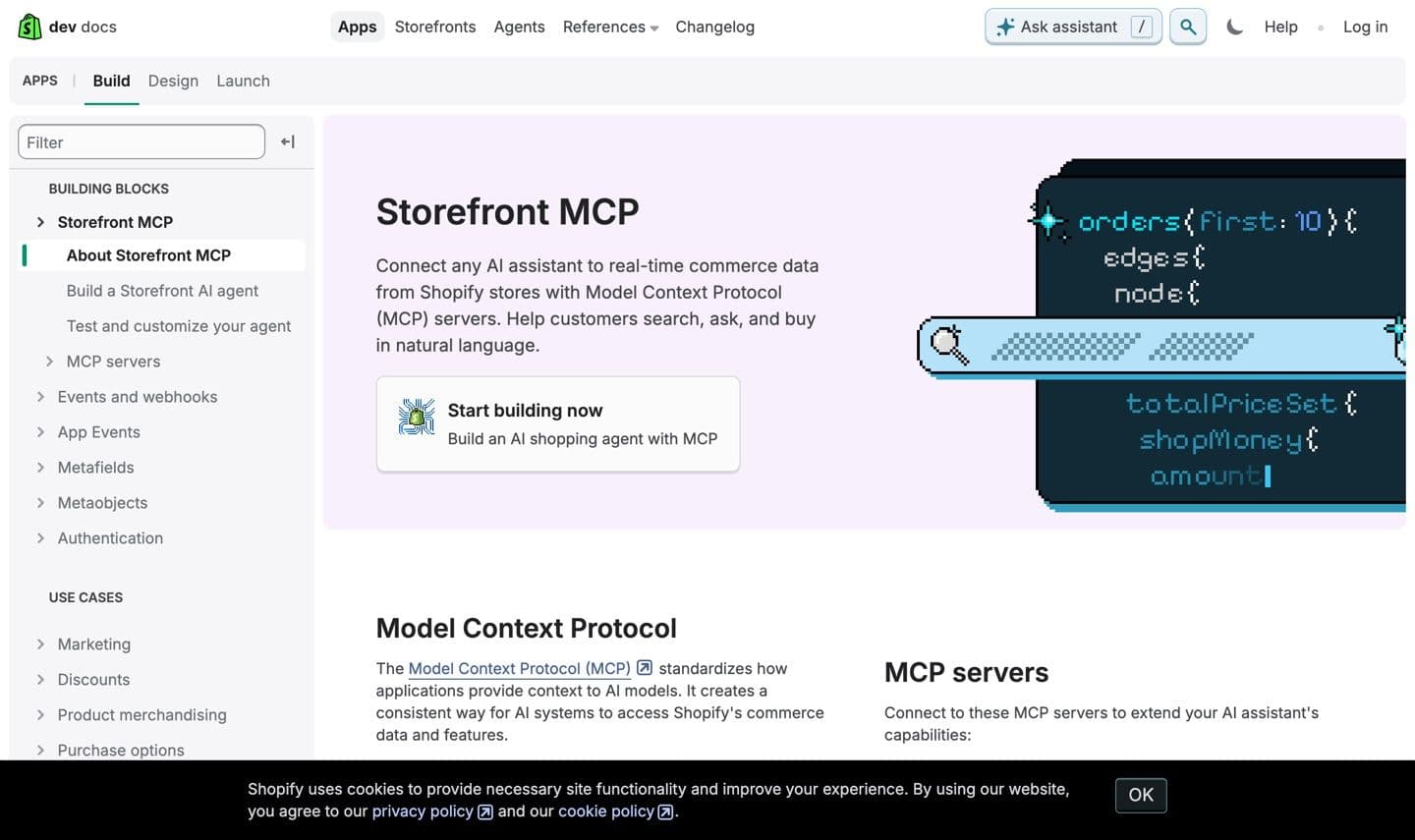
- search_catalog and lookup_catalog run natural-language and structured search across your live catalog.
- get_product returns full data for one product: variants, options, images, description.
- create_cart, update_cart, get_cart and cancel_cart build and manage a basket.
- create_checkout, update_checkout, complete_checkout, get_checkout and cancel_checkout carry it through payment.
- get_order reads back an order the agent placed.
An assistant holding those 13 can take a shopper from "do they have something like this in a wide fit?" to a completed order without rendering a single page of your theme. Allbirds publishes the flow in its own llms.txt: discover, search, cart, checkout, fulfill, complete.
How many Shopify stores have MCP live
Twenty of 22. The two exceptions returned a clean 404 rather than an error, which reads like configuration rather than outage.
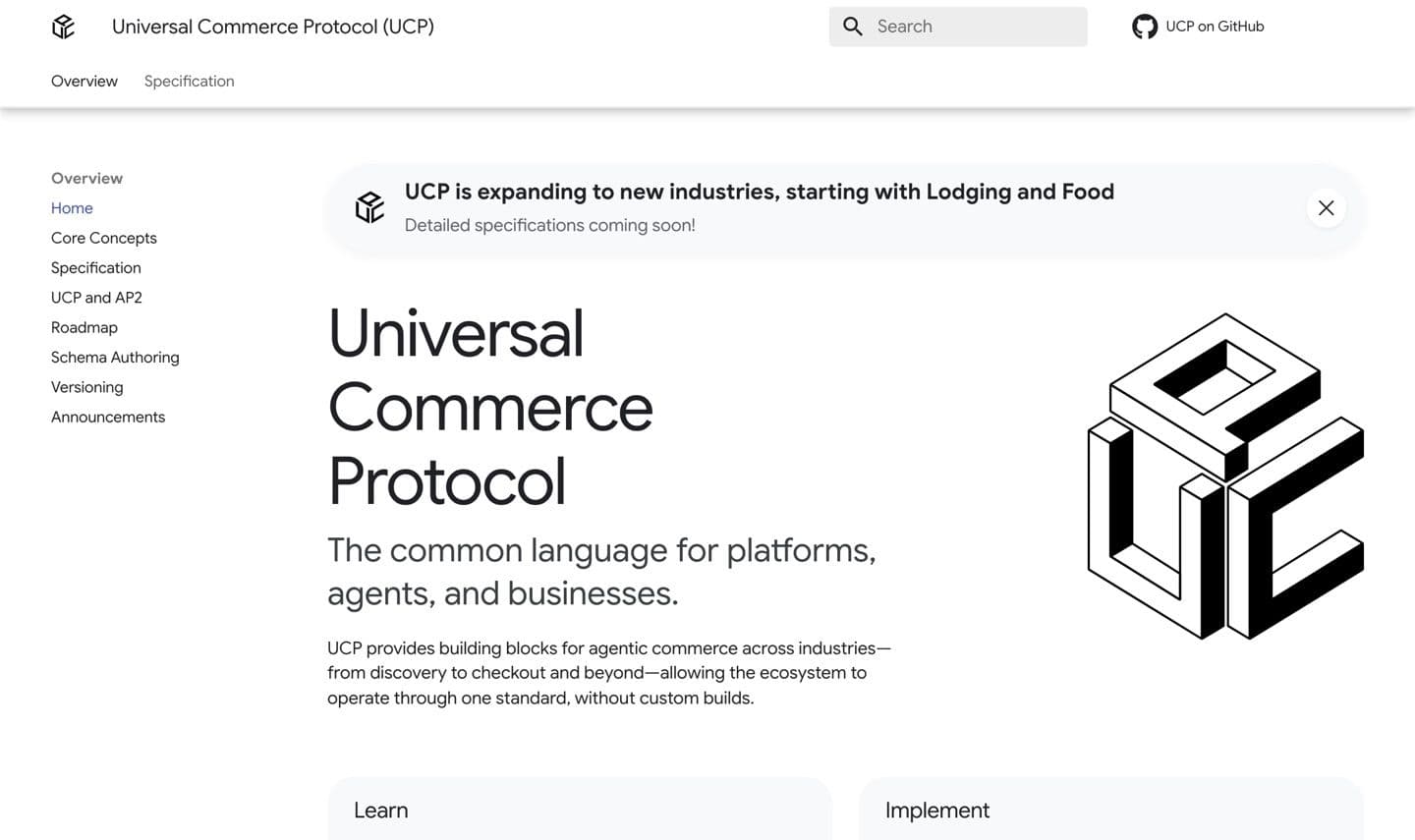
One detail cost us a rewrite and is worth passing on. The endpoint is not at /.well-known/mcp.json, which is where we looked first and found nothing on any store. The real path is /api/ucp/mcp, and it is advertised inside the store's own llms.txt and UCP manifest. If you have checked and concluded your store has no agent surface, check again at the right address.
20 of 22
stores returning a working MCP tool list
13
tools advertised, search through completed order
0 of 22
responding at the /.well-known/mcp.json path
What the MCP endpoint cannot answer
The endpoint returns your data verbatim. It does not reason about your products, reconcile contradictions, or fill gaps. Ask whether a jacket will hold up in a Chicago winter and it can only hand back whatever your description happens to say.
Three failure modes show up repeatedly. Search results flatten variants, so an agent confidently recommends a colorway that sold out on Tuesday. Buying facts live inside images, so a fit note baked into a size-chart JPEG is invisible to the tool that needs it. Policy answers drift, because the policy page and the knowledge base disagree and nobody reconciled them.
The plumbing is honest. When the answer is wrong the data was wrong first, and now it is wrong programmatically, at scale, in a channel nobody on your team is watching.
How to prepare your catalog for agent traffic
Write product data for a reader who cannot see the photograph, because that is exactly who is reading. Fit, materials, compatibility, dimensions, what it pairs with. Move those facts out of images and into text and structured fields. The same record has to hold up in the file you publish, which is product feed management.
Keep policies in one canonical place so every surface returns the same sentence. Then check the answers from the agent's side rather than the admin's, because the admin view will always look fine.
- POST a tools/list call to yourstore.com/api/ucp/mcp and read what comes back.
- Run search_catalog with a real shopper phrase and read the text an agent would receive.
- Pick your three highest-margin products and check whether their buying facts exist outside the images.
- Reconcile your returns policy across the policy page, the knowledge base, and the footer.
Where Kinect fits
Kinect's Agent-Ready Storefront works the layer above the endpoint. Catalog Enrichment fills in fit, fabric, occasion and pairings so search_catalog has something to return, and distributes the same data to ChatGPT, Google, and the other surfaces where AI shops.
The same product intelligence runs the AI Sales Rep on your storefront, so the work pays twice. Brands with Kinect see 3–6% more revenue, measured against their own baselines.
Frequently asked questions
What is Shopify Storefront MCP?
It is an agent-facing endpoint on Shopify storefronts that lets an AI assistant search a catalog, read product details, build a cart, and complete a checkout over the Model Context Protocol. Shopify provisions it as platform infrastructure.
Where is my store's MCP endpoint?
At yourstore.com/api/ucp/mcp, accepting JSON-RPC over POST. It is also named inside your store's llms.txt and UCP manifest. It is not at /.well-known/mcp.json, which returned nothing on all 22 stores we tested.
Is the storefront MCP endpoint on for every Shopify store?
Close to it. Twenty of the 22 verified Shopify storefronts we tested in August 2026 answered a tools/list call, none of them by merchant configuration. Test your own domain rather than assuming either way.
Can I see what agents are asking my store over MCP?
Shopify gives merchants very little visibility into agent traffic today. That reporting gap is a large part of why brands run a separate agent-readiness layer: you want to know what is being asked and answered in your name.
Does MCP replace SEO and product feeds?
No. Assistants blend live protocol access with crawled pages and shopping feeds. You want all three telling the same story, because the contradictions between them are where wrong answers come from.
Related reading