3 min readAgentic payments
How the x402 Protocol Lets Software Pay Software Per Request

By Kratik Agrawal
Published Jun 28, 2026 Updated Aug 5, 2026
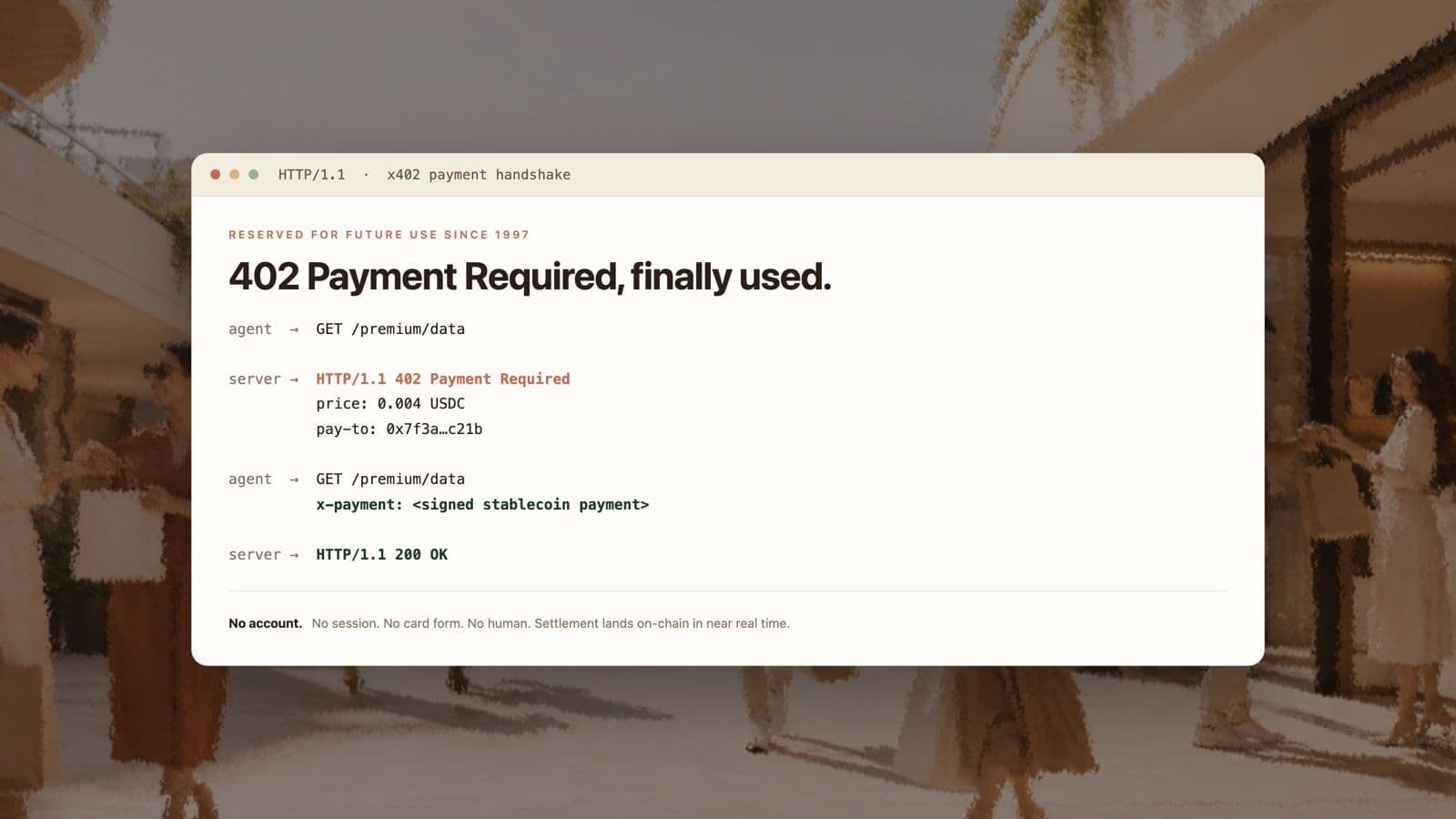
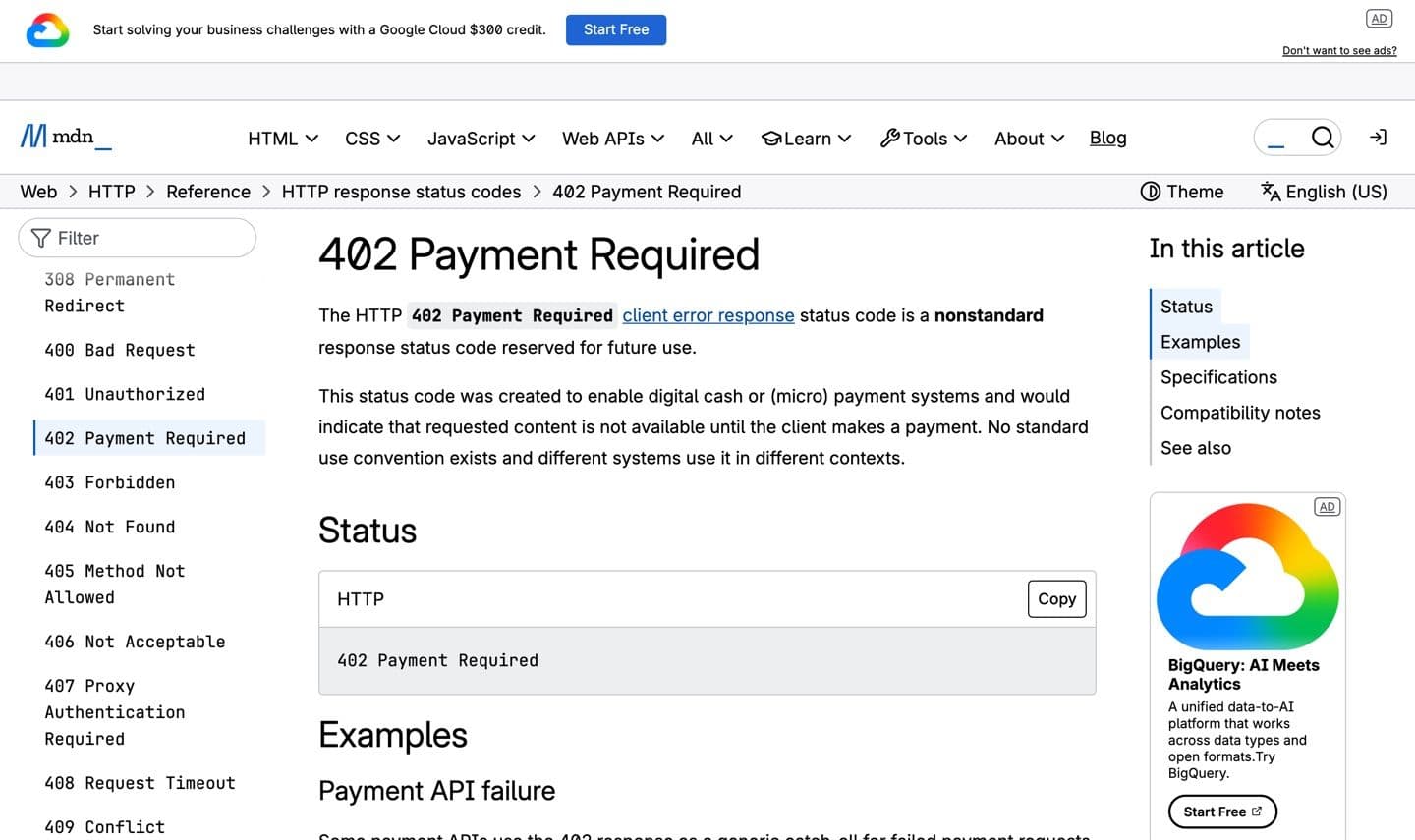
HTTP has carried a status code marked reserved for future use since 1997: 402, Payment Required. For 29 years nothing shipped against it.
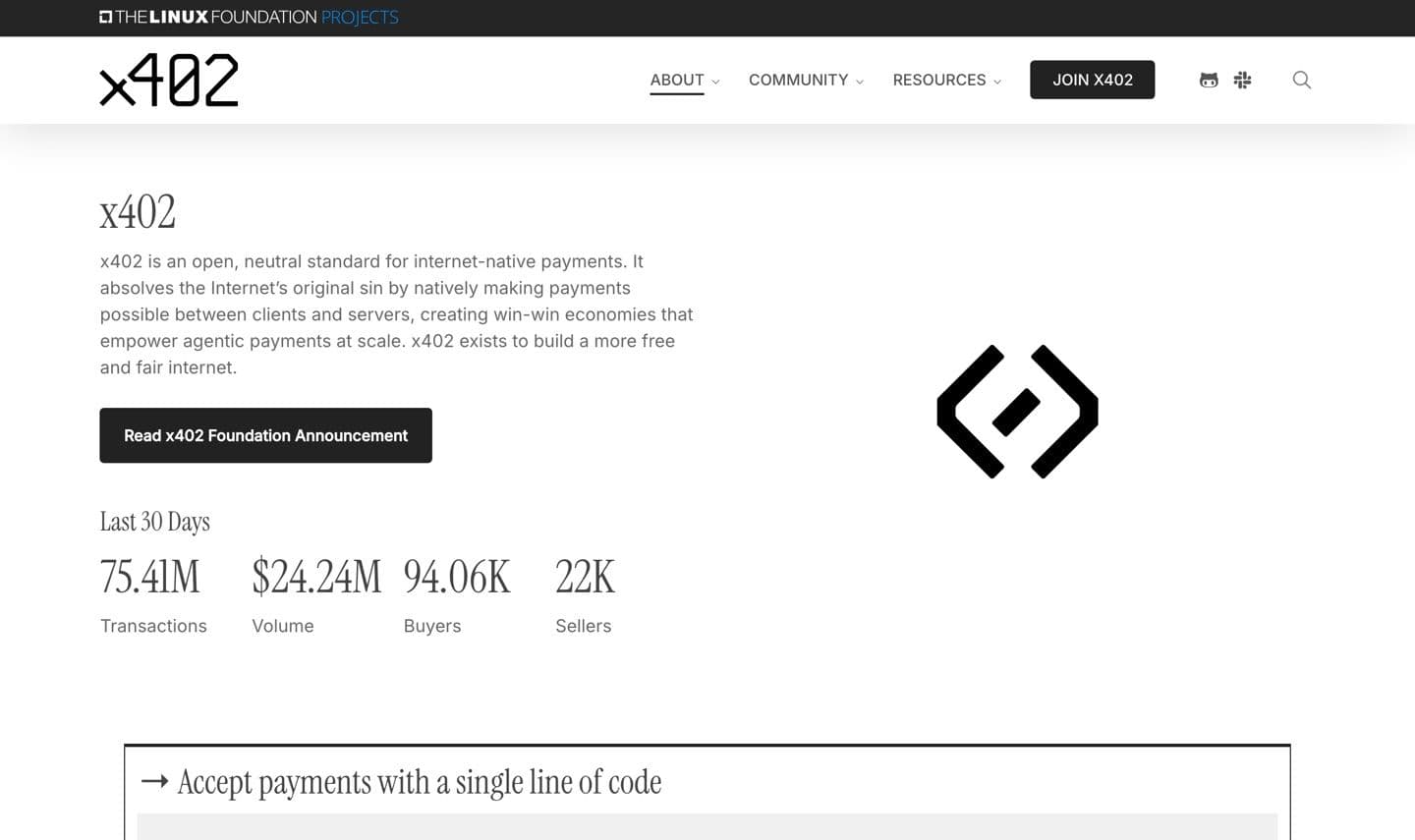
x402 is the protocol that finally uses it. Coinbase originated the spec and now stewards it alongside partners including Cloudflare, turning 402 into a payment handshake between two pieces of software with no human in the loop.
Quick answer
x402 is an open protocol that lets an AI agent pay for a web resource per request. The server answers a request with HTTP 402 and a price, the agent attaches a signed stablecoin payment to the retried request, and the server verifies and serves. There is no account, no session, no card form and no checkout page.
How the x402 handshake works
The protocol is small enough to describe in four steps. An agent requests a resource. The server replies 402 with a price and a payment address. The agent's wallet signs a stablecoin payment, USDC at launch, and attaches it to the retried request. The server verifies and serves.
Settlement lands on-chain in near real time. That shape covers three things card rails cannot: amounts below a cent, where interchange economics collapse; signup friction, which a machine cannot clear because it cannot fill a form; and finality between two parties that have no prior relationship. Payment becomes an HTTP header rather than a flow.
Where x402 is actually used today
Real usage is machine-to-machine plumbing. Shopping is not on the list.
- Paid APIs and data, where an agent meters itself onto a service per call instead of holding a subscription it mostly wastes.
- Pay-per-crawl, where a content owner charges AI crawlers per request. Cloudflare popularised this using the same 402 mechanics.
- Agent-to-agent services, where one agent buys compute, search or tooling from another in the middle of a task.
The stewards do not claim retail checkout, and the omission is deliberate. Consumer purchases carry humans, disputes, refunds and regulation, which is why mandate-and-token designs like AP2 and the Agentic Commerce Protocol own that lane. An AP2 extension slots x402 in as one settlement option underneath a mandate rather than as a replacement for it.
What x402 means for a Shopify brand
Watch it, do not build against it. If x402 reaches your business it will arrive through your CDN as a crawler-monetisation toggle, or through your payment processor as a settlement rail underneath a mandate. Neither is an integration project you staff.
The second-order effect is the part worth tracking. Once agents can pay per request, consuming high-quality product data at scale becomes economical, which raises the value of having product data worth consuming.
That is the same conclusion every protocol in this series arrives at. The rails are being standardised below you by companies with more engineers than you have. Our August 2026 scan found the transactional plumbing already live on 20 of 22 Shopify storefronts, provisioned by the platform, identical across competitors. Whatever separates you from the store next door has to live in the data flowing over it.
Where Kinect fits
Kinect works the layer the protocols do not touch. Catalog Enrichment makes your products legible enough that an agent picks them, and the AI Sales Rep converts the shoppers those agents send.
Plumbing is somebody else's job. Being worth plumbing to is yours, and it is the one part no platform will hand you for free.
Frequently asked questions
What is the x402 protocol?
x402 is an open protocol that uses the HTTP 402 Payment Required status so a client can pay for a resource per request. The server returns a price, the client attaches a signed stablecoin payment, and the server serves the resource.
Is x402 crypto-only?
Settlement is stablecoin-based today, USDC at launch, because on-chain rails are what make instant machine-to-machine micropayments work. Pairing it with AP2 wraps it in the same authorization grammar as card payments, which keeps the crypto under the hood.
Should a Shopify brand accept x402 payments?
There is nothing to accept in a retail sense yet. The merchant-relevant question sits on the other side of the protocol: whether you would ever charge AI crawlers for access, and for most product brands the answer is no.
How does x402 relate to ACP and AP2?
They occupy different layers. The Agentic Commerce Protocol is a commerce flow, AP2 is payment authorization, and x402 is a settlement rail. They compose, so an AP2 mandate can authorize a payment that settles over x402.
Related reading